



The short answer: On the Maine and New Hampshire Seacoast, Kittery is the best town to retire in, followed by Portsmouth and Exeter. They win because they hold up in February: year-round neighbors, a hospital close by, and somewhere to walk. Ogunquit, Rye and Wells rank lowest because the things that make them great in summer work against you in winter.
Retiring on the Seacoast is a February decision, not a July decision. In July every town on this coastline is perfect. In February it's dark at 4:30, half the street can be empty, and the closest emergency room might be a long drive in the snow.
So I ranked 8 towns on both sides of the river, from Kittery and York in Maine to Portsmouth, Exeter, Dover and Rye in New Hampshire, using the same 5 criteria for every one. This is my opinion, scored my way, and the numbers behind it are below.
Key takeaways
- Final ranking, best to worst: Kittery, Portsmouth, Exeter, York, Dover, Wells, Rye, Ogunquit.
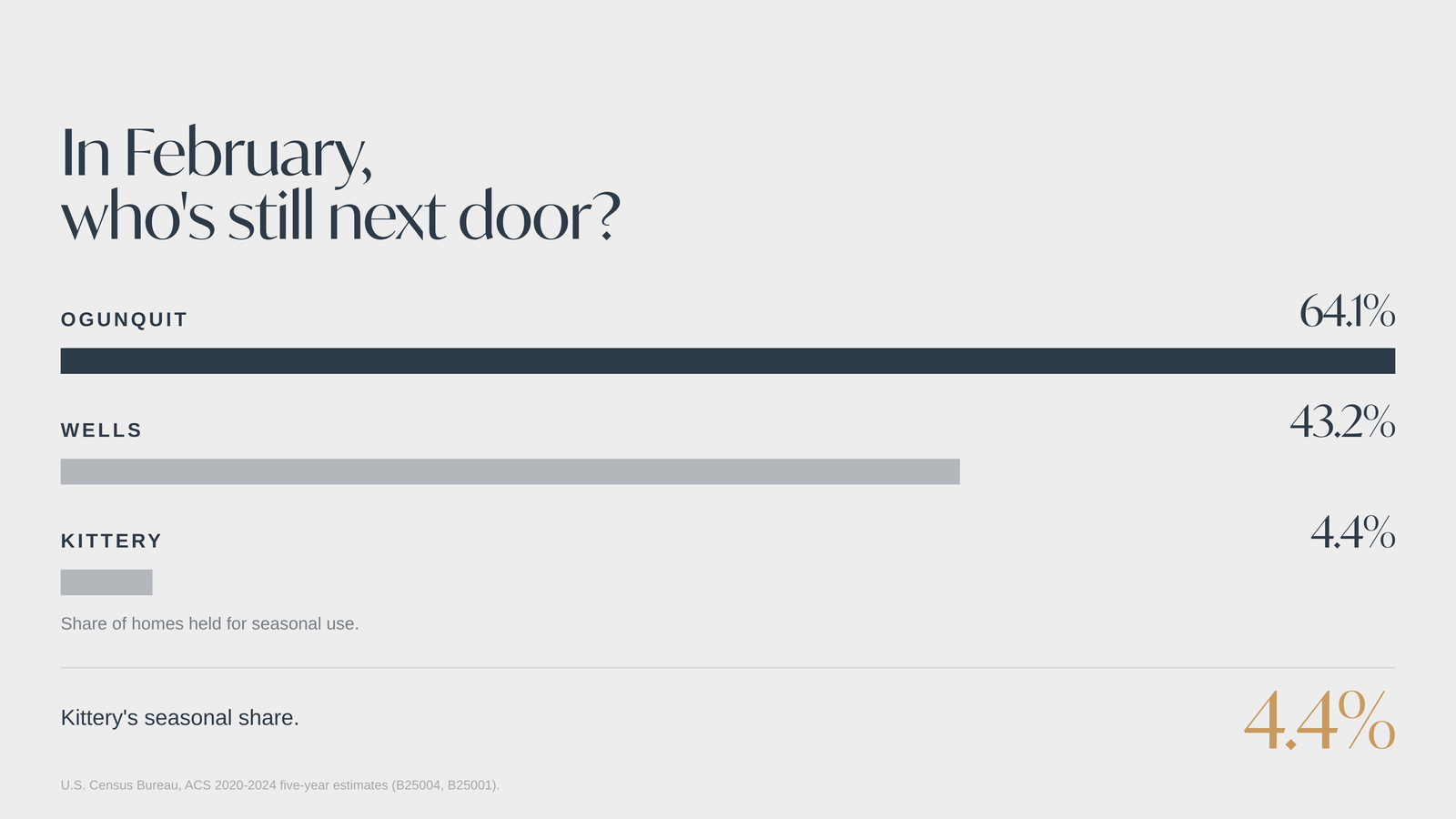
- Kittery is 4.4% seasonal. Ogunquit is 64% seasonal.
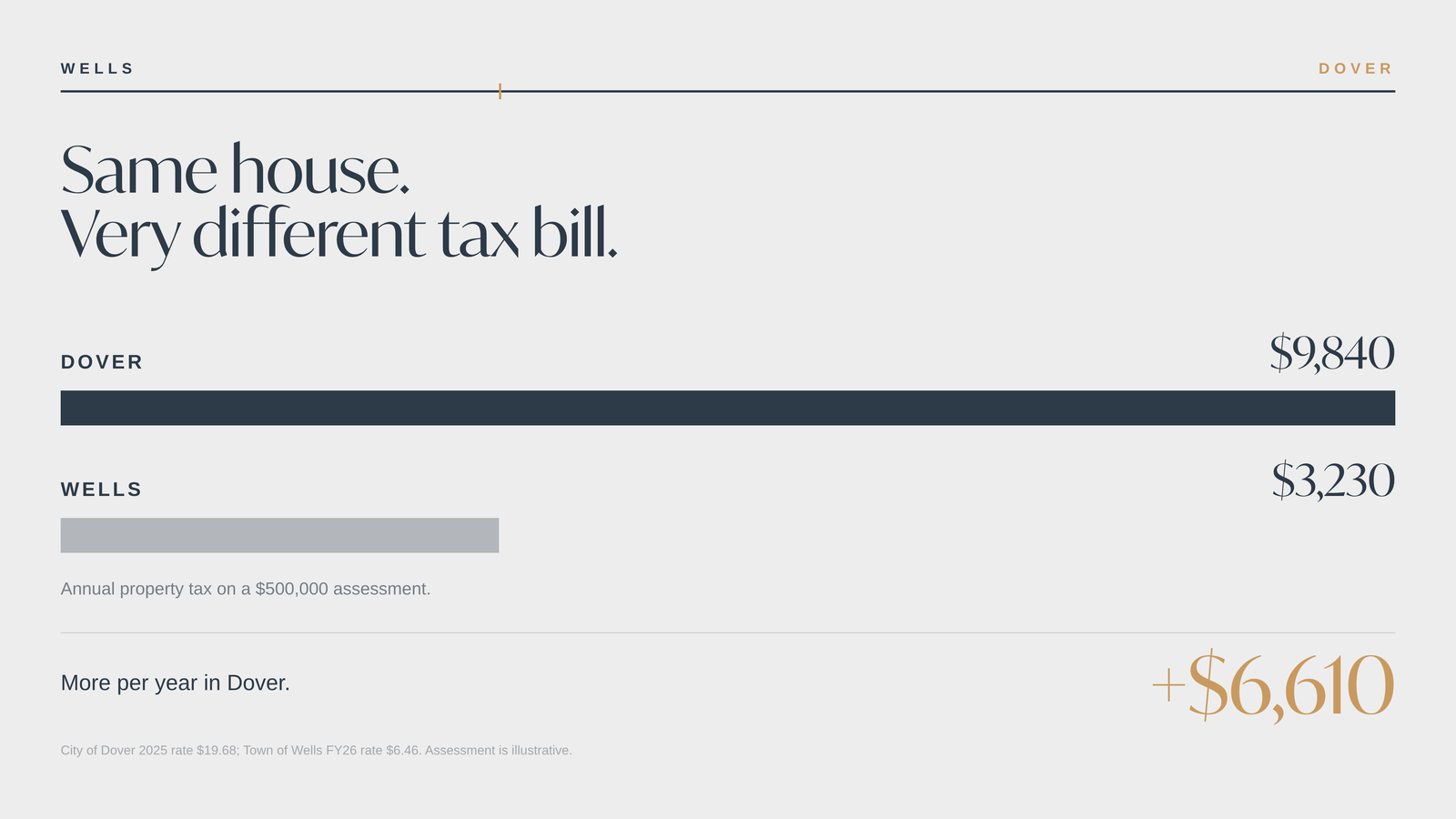
- Dover's tax rate of $19.68 per $1,000 is the highest of the 8 towns. Wells, at $6.46, is the lowest.
- On a $500,000 home, that gap is roughly $9,800 a year in Dover against about $3,200 in Wells.
- Kittery's catch: no supermarket, and its senior tax relief requires 10 years of residency.
How are the Seacoast's retirement towns scored?
Every town gets judged on the same 5 things. One, is anybody there in the winter, measured by how many homes in town are seasonal. Two, a hospital, not just a clinic: where do you go at 2 in the morning. Three, can you walk to something, like coffee, a library or a pharmacy. Four, the tax bite. Five, the price of getting in the door.
Why do Ogunquit, Rye and Wells rank at the bottom?
8. Ogunquit. I love Ogunquit and I'd vacation there forever. But 64% of the homes in Ogunquit are seasonal, about 2 out of every 3 front doors. Ogunquit's tax rate is $6.73 per $1,000, and it's low precisely because summer homes and hotels carry the budget. There's no hospital in town. The thing that makes it great in August is the thing that makes it lonely in January.
7. Rye. Rye is beautiful, and its tax rate of $8.55 per $1,000 is low for New Hampshire. But the U.S. Census puts Rye's median home value at $1,028,100, and that census figure runs behind the market. Rye doesn't really have a downtown you walk to, so you're paying the most on this list for a town that still needs you to drive at 85.
6. Wells. Wells has the lowest tax rate on the list at $6.46 per $1,000, and there's an Amtrak stop. But 43% of the homes in Wells are seasonal, and if something happens late at night, you're in the car driving to York Hospital, Maine Med or Portsmouth.
- Ogunquit: 64% seasonal homes; tax rate $6.73 per $1,000
- Wells: 43% seasonal homes; tax rate $6.46 per $1,000
- Rye: tax rate $8.55 per $1,000; Census median home value $1,028,100
Sources: seasonal share, U.S. Census Bureau, ACS 2020-2024 five-year estimates (B25004, B25001); Wells tax rate, Town of Wells (FY26); Ogunquit tax rate, Live the Seacoast research (September 2026); Rye tax rate, Tate & Foss (Jan 2026); Rye median home value, U.S. Census QuickFacts (ACS 2020-2024).
Why are Dover and York in the middle?
5. Dover. Dover checks a lot of boxes. Wentworth-Douglass Hospital is right there with 178 beds, there's a real downtown with restaurants you can walk to, and people live there all 12 months of the year. The problem is the tax rate. Dover's rate is $19.68 per $1,000 after a big jump last year, the highest on this list.
Here's the napkin version. On a $500,000 home, Dover's rate works out to about $9,800 a year in property tax. In Wells, the same price comes to about $3,200. That's over $6,000 a year apart, assuming the home is assessed close to what you paid, which isn't always true, so check the actual assessment. On a fixed income, that's not a rounding error. That's your heating bill and then some.
4. York. York has a hospital in town, York Hospital, plus the beaches, the village and Nubble Light. York's tax rate is $8.25 per $1,000. Two things hold it back: 34% of York's homes are seasonal, and the Census puts York's median home value at $636,400, which runs behind what you'll actually pay. York is a great place to retire if the budget's there.
- Dover: tax rate $19.68 per $1,000; Wentworth-Douglass Hospital, 178 beds
- $500,000 home: about $9,800 a year in Dover vs about $3,200 in Wells
- York: tax rate $8.25 per $1,000; 34% seasonal homes; Census median home value $636,400
Sources: Dover tax rate, City of Dover (2025); Wells tax rate, Town of Wells (FY26); Wentworth-Douglass bed count, Live the Seacoast research (September 2026); York seasonal share, U.S. Census Bureau ACS 2020-2024; York tax rate, Tate & Foss (Jan 2026); York median home value, U.S. Census QuickFacts (ACS 2020-2024). Annual tax estimates are $500,000 multiplied by each town's rate.
Why are Exeter and Portsmouth on the podium?
3. Exeter. Exeter might be the most complete small town on the Seacoast. Exeter Hospital is right there, the downtown is walkable, and the Amtrak Downeaster stops in town, so you can get to Boston without driving. Exeter also has real retirement options, including RiverWoods, a continuing care community, and Ray Farm, a 55+ neighborhood. What keeps it from number 1 is Exeter's tax rate of $18.76 per $1,000. Census home value is $456,600, which isn't crazy for the Seacoast, but you pay for that downtown every year on your tax bill. Great town. Expensive to stay in.
2. Portsmouth. If I'm being purely practical, Portsmouth might be the best town on this coast to grow older in. Portsmouth Regional Hospital is a Level II trauma center. You can walk to restaurants, the library, Market Square and the theater. Portsmouth's tax rate is a reasonable $11.51 per $1,000, because so much value in the city carries the budget. The problem is getting in: the Census puts Portsmouth's median home value at $688,500, and that number is behind the market. It's also busy and loud in the summer, which some people love and some people didn't retire for.
- Exeter: tax rate $18.76 per $1,000; Census median home value $456,600
- Portsmouth: tax rate $11.51 per $1,000; Census median home value $688,500; Portsmouth Regional is a Level II trauma center
Sources: Exeter tax rate, Town of Exeter (2025); Portsmouth tax rate, City of Portsmouth (FY26, 18 Dec 2025); median home values, U.S. Census QuickFacts (ACS 2020-2024); trauma level, Portsmouth Regional Hospital newsroom.
Why is Kittery, Maine the best Seacoast town to retire in?
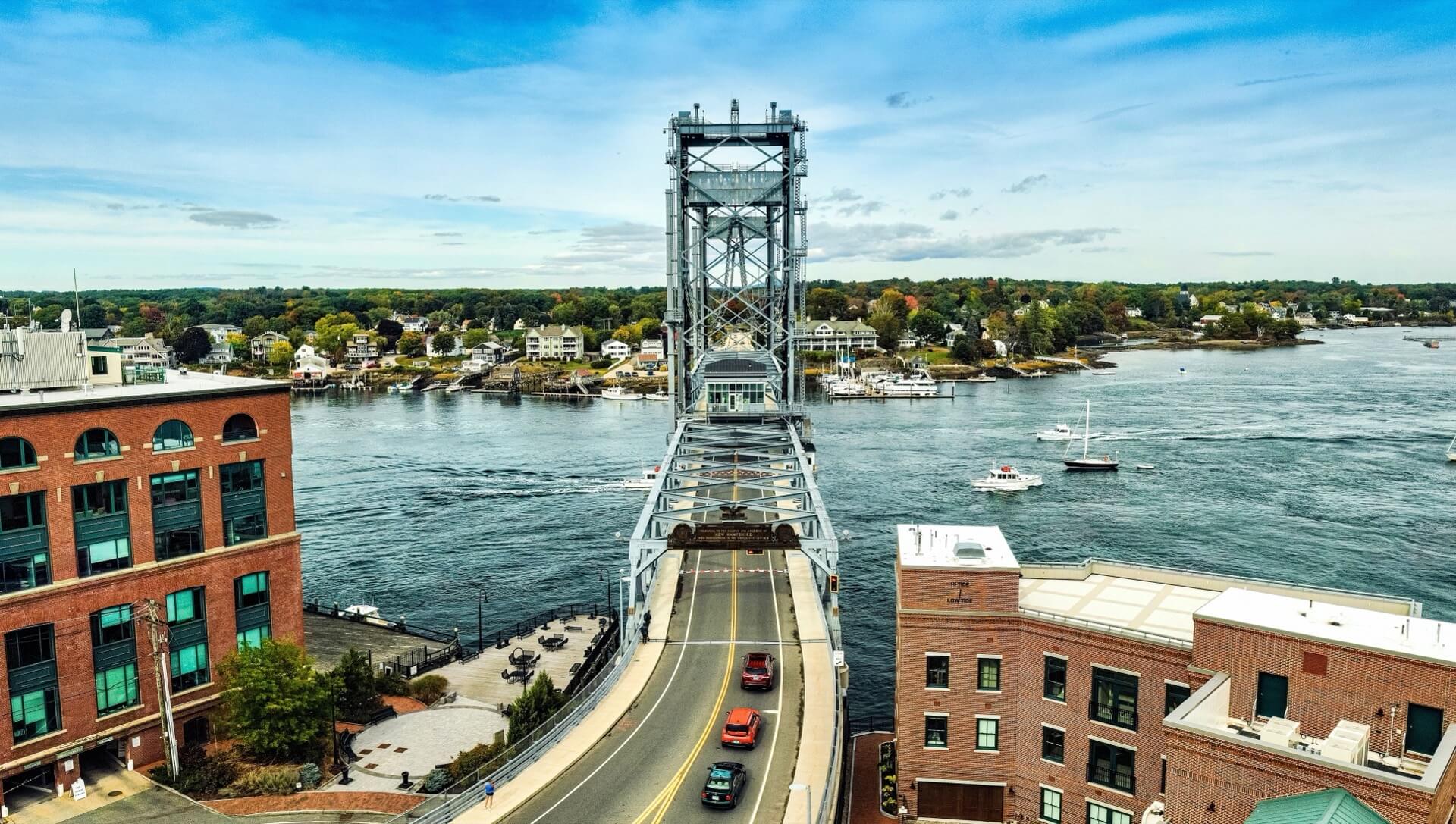
1. Kittery. Kittery is 4.4% seasonal, against Ogunquit's 64%, so about 95 out of every 100 homes in Kittery have somebody in them in February. The hospital question gets answered by a bridge: Portsmouth Regional, the Level II trauma center, is right across the river, and the Memorial Bridge has a pedestrian walkway, so you can literally walk into Portsmouth. You get the city without paying city prices. The Census puts Kittery's median home value at $468,500, and Kittery has Shepard's Cove, a 55+ community on Spruce Creek.
Here's what it costs you. Kittery's tax rate is going up, from about $9.29 to about $9.92 per $1,000. Kittery's own senior tax relief requires 10 years of residency before you qualify for the bigger programs, so a brand new retiree is locked out for a decade. And Kittery doesn't have a supermarket, so you're driving across the bridge or up to York for groceries. Kittery is the best town to retire in on the Seacoast, and you still have to drive to buy eggs.
- Kittery: 4.4% seasonal homes; Census median home value $468,500
- Kittery tax rate: about $9.29 rising to about $9.92 per $1,000
- Kittery senior tax relief: 10 years' residency required for the larger programs
Sources: median home value, U.S. Census QuickFacts (ACS 2020-2024); seasonal share, U.S. Census Bureau, ACS 2020-2024 five-year estimates (B25004, B25001); tax rate change and senior tax relief rule, Live the Seacoast research (September 2026).
Here's the full ranking on video:
Who should ignore this ranking?
If the ocean outside your window is the whole point of retiring, flip this list upside down. Buy in Ogunquit or Rye and go in with your eyes open. But if the point is still living here at 85, with a neighbor next door, a hospital close by and somewhere to walk, Kittery, Portsmouth and Exeter are the towns that hold up all year round.
If you're planning a move to the Maine or New Hampshire Seacoast, grab our free relocation guide.
Frequently asked questions
What is the best town to retire in on the Seacoast of Maine and New Hampshire?
Kittery, Maine ranks first because it is only 4.4% seasonal and sits across the Memorial Bridge from Portsmouth Regional Hospital, a Level II trauma center (U.S. Census ACS 2020-2024; Portsmouth Regional Hospital).
Which Seacoast town has the highest property tax rate for retirees?
Dover, NH has the highest rate of the 8 towns ranked, at $19.68 per $1,000, which is about $9,800 a year on a $500,000 home (City of Dover, 2025).
Which Seacoast town has the lowest property tax rate?
Wells, Maine has the lowest rate of the 8 towns ranked, at $6.46 per $1,000, though 43% of its homes are seasonal (Town of Wells, FY26; U.S. Census ACS 2020-2024).
Why isn't Ogunquit a good place to retire year-round?
64% of Ogunquit's homes are seasonal and there is no hospital in town, so the town that's great in August can be lonely in January (U.S. Census ACS 2020-2024).
Does Kittery have senior property tax relief?
Yes, but Kittery's larger senior tax relief programs require 10 years of residency, so a new retiree has to wait a decade to qualify.
What is the downside of retiring in Kittery, Maine?
Kittery has no supermarket, so groceries mean a drive across the bridge or up to York, and its tax rate is rising from about $9.29 to about $9.92 per $1,000.
Check out this article next