


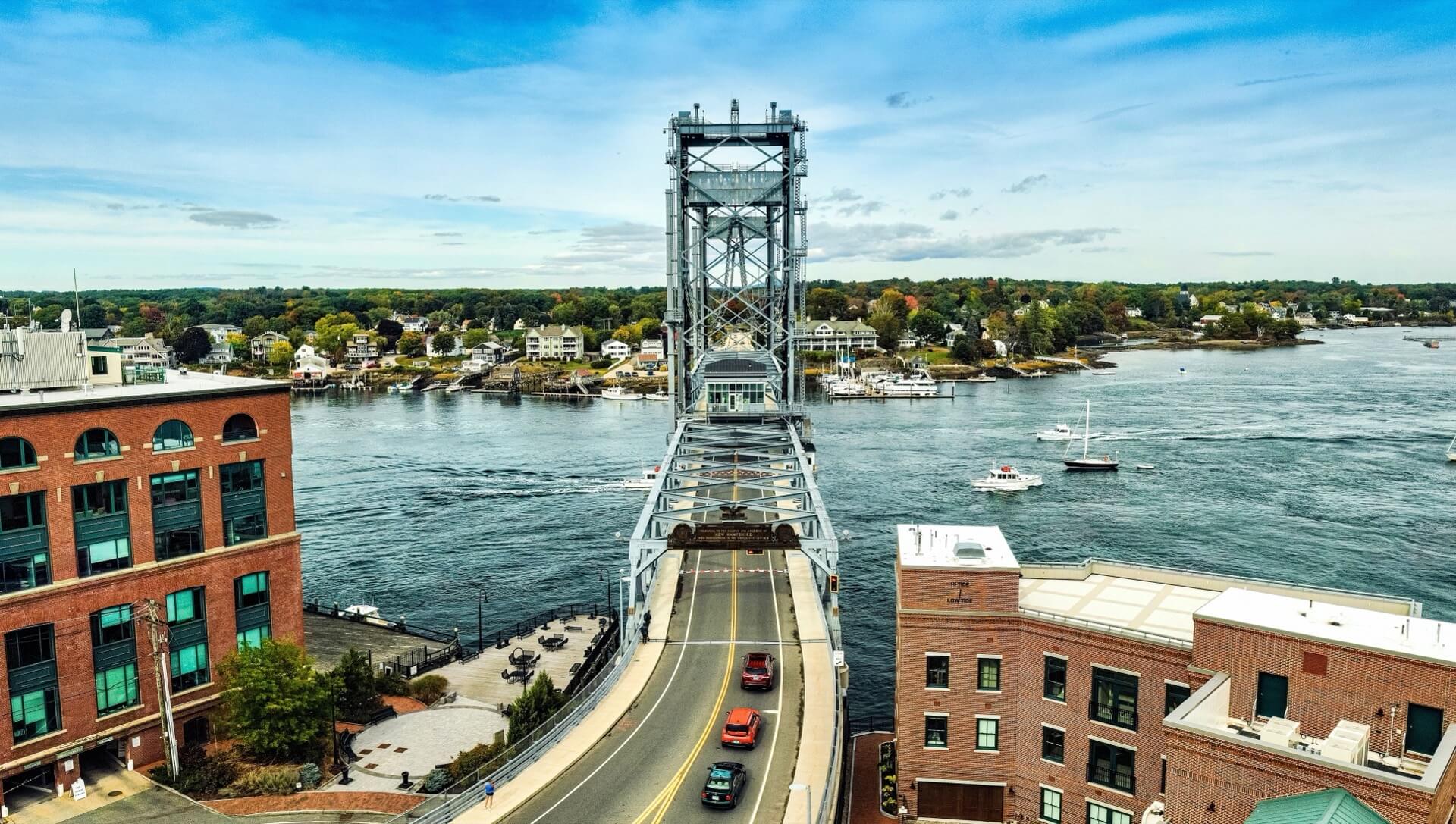

The short answer: Most people who move to the Seacoast buy the right house in the wrong season. The four mistakes I see most are shopping only in July, assuming New Hampshire is always cheaper, buying the town instead of what's under the house, and skipping the heat and insurance math. Each one has a simple fix, and none of them should scare you off.
Buyers come up in July. They walk around Ogunquit, get a coffee in Portsmouth, drive Route 1A with the windows down, and say, "That's it. Find us something by the water." I get it. It's the best place on earth in July. But I watch the same handful of mistakes happen every year with smart people moving to the Maine and New Hampshire Seacoast, from Kittery and York to Dover and New Castle. They did their homework. They just did it on the wrong things.
Key takeaways
- Visit the town you like once in summer and once in February before you buy.
- New Hampshire has no tax on wages and no sales tax, but property tax rates swing widely from town to town.
- Maine taxes income, while many coastal Maine towns keep property tax rates low.
- Check the school district for the exact address, and test the well water every time.
- Ask what heats the house and get an insurance quote before you write the offer.
Why is shopping the Seacoast in July a mistake?
July shows you a Seacoast town at full capacity, and in towns like Ogunquit, Wells and York, a large share of homes are only lived in for part of the year.
- Ogunquit: 64% of homes are held for seasonal use.
- Wells: 43% of homes are held for seasonal use.
- York: 34% of homes are held for seasonal use.
Source: U.S. Census Bureau, American Community Survey 2020-2024 five-year estimates (tables B25004 and B25001).
In Ogunquit, that's two out of every three front doors. In July every restaurant is open and every house is lit up, and you fall in love with that. Then you close in October, and by January you're walking the dog and the house on the left is dark, the house on the right is dark, and the restaurant you loved is closed until May.
They went home. You're the one who stayed.
Some people want exactly that: a quiet, empty beach. That's great. I'm not saying it's wrong. I'm saying know it before you buy. If you're serious, come up once in the summer and once in February. Same town, same street. Drive it at 5:00 on a Tuesday in February. If you still love it, the Seacoast is right for you.
Summer sells the town. February tells you the truth about what it's like to live here.
Is New Hampshire really cheaper than Maine?
New Hampshire is half right as the cheaper state: it has no tax on wages, no sales tax, and its interest and dividends tax was fully repealed starting in 2025. That's real money, especially if you're coming from Massachusetts.
But New Hampshire pays for things with property tax, and the rate swings from town to town.
- New Castle, NH: $5.73 per $1,000 of assessed value (2025).
- Dover, NH: $19.68 per $1,000 of assessed value (2025).
- On a $600,000 assessment, that's about $3,438 a year in New Castle and about $11,808 a year in Dover, roughly 3.4 times as much.
Source: NH Department of Revenue Administration, 2025 tax rates. The $600,000 assessment is illustrative.
Same state, same coastline, about 20 minutes apart. Same price, wildly different bill.
Maine is the opposite deal. Maine taxes your income, but a lot of coastal Maine towns have fairly low property tax rates, because all those summer homes carry the town budget.
Who comes out ahead, New Hampshire or Maine?
It depends on your income. If you're still working and earning a good salary, New Hampshire usually wins. If you're retired and most of your income is a pension or Social Security, the math can flip, and Maine starts looking a lot better than people expect.
I'm a realtor, not your accountant. Run the napkin math with your real income and the real tax rate of the town you're looking at, then take it to a financial advisor or CPA who knows both states before you commit to anything.
What should you check besides the town itself?
People shop the town when they should be shopping the house and the school district. The town line is not always the school line.
Eliot and South Berwick, Maine share a school district, Marshwood, and Marshwood also takes students from Rollinsford, which is in New Hampshire. So you can live in one state and send your kids to school in another. Check the actual district for the actual address.
Then there's the stuff nobody puts in the listing photos. Once you get outside the town centers, a lot of Seacoast houses are on a private well and a septic system, with no town water and no town sewer. Test the water every time before you buy.
What is a home inspection actually for on the Seacoast?
A home inspection is for major health and safety issues, not for asking $10,000 off because a wall is scuffed. Water quality, the septic, the heating system and the roof are what you're paying the inspector to look at, not the paint colors.
And when you hear, "We just did the septic," ask when. Sometimes "just" means 2009.
What are the two bills Seacoast buyers forget to budget for?
The two bills buyers forget on the Seacoast are heat and water. Not drinking water. The ocean.
Heat first. Oil heat is common in Maine, and plenty of buyers coming from natural gas or a warm climate buy a nice older colonial without ever asking what heats it. Then the first oil delivery shows up in November. Ask what heats the house, how old the system is, and for last winter's bills. Every time.
Now the water. Flood maps in York County are being redrawn, and Kittery passed new coastal hazard zones this past August that limit building right on the shoreline. If you're buying near the water, get an insurance quote before you write the offer, not after. Find out the flood zone today and ask what it might be after the new maps. Nobody can tell you that for sure, but you should know the question exists. We can pull the most recent FEMA flood maps to see whether a property sits in a flood zone.
So should you still move to the Seacoast?
Yes, with your eyes open. Shop it in February, not just July. Do the tax math with your own numbers, then hand it to a CPA. Check the district and the well, not just the town. And price the heat and the insurance before you fall in love with the kitchen.
This is still an incredible place to live. I wouldn't live anywhere else. Nobody likes moving, so do it once and do it right.
If you want the full rundown on what each Seacoast town actually costs, download our free Seacoast relocation guide.
Frequently asked questions
What share of homes in Ogunquit are seasonal?
About 64% of homes in Ogunquit, Maine are held for seasonal use, compared with 43% in Wells and 34% in York, according to U.S. Census Bureau ACS 2020-2024 five-year estimates.
Does New Hampshire have an income tax?
New Hampshire has no tax on wages and no general sales tax, and its interest and dividends tax was fully repealed starting in 2025. The state relies on local property taxes instead.
How different are property taxes in Dover and New Castle, NH?
Dover's 2025 rate is $19.68 per $1,000 and New Castle's is $5.73 per $1,000, so a $600,000 assessment costs about $11,808 a year in Dover and about $3,438 in New Castle, per NH Department of Revenue Administration rates.
Is Maine or New Hampshire better for retirees?
It depends on your income. Working buyers with a good salary usually come out ahead in New Hampshire, while retirees living mostly on a pension or Social Security may find Maine's math works better, so run your numbers with a CPA who knows both states.
When is the best time to visit before moving to the Seacoast?
Visit the same town and street once in summer and once in February. February shows you what living there year round is really like.
Can you live in New Hampshire and go to school in Maine?
Yes, in some cases. Marshwood, the school district for Eliot and South Berwick, Maine, also takes students from Rollinsford, New Hampshire, so check the district for the exact address.
Check out this article next